
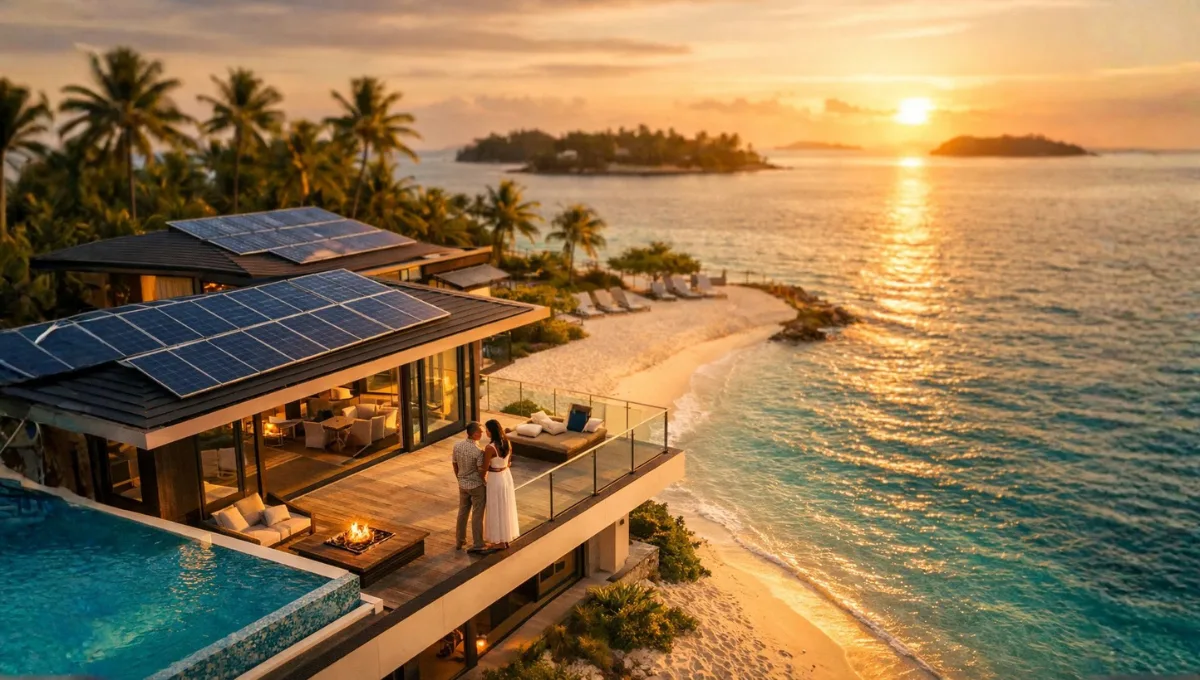
I’ll never forget the moment a client from Manhattan described her morning routine at her newly acquired villa in the Bahamas. She woke at dawn, asked her smart home system to gradually illuminate the bedroom as the sun rose over the water. The espresso machine had already brewed at her specified time. Her solar panels had optimized output for the day’s weather forecast, her saltwater pool was perfectly balanced without her lifting a finger, and her security system had monitored the beach perimeter all night. When she stepped onto the terrace with her coffee, everything felt effortless. That’s not a fantasy anymore. That’s 2026.
The luxury island lifestyle is experiencing a profound transformation, and it’s nothing like the castaway fantasy most of us imagine. Today’s affluent Americans seeking island living aren’t abandoning technology; they’re bringing the smartest, most purposeful innovations to their paradise. Smart lifestyle trends are fundamentally reshaping how we experience island living, turning remote locations into sophisticated sanctuaries where sustainability, privacy, and seamless connectivity coexist in ways that seemed impossible just a few years ago.
Why is this happening now? Several forces have converged. The pandemic accelerated remote work, making geographic independence a reality rather than a dream. Simultaneously, climate consciousness reached the mainstream, meaning that serious investors want their island escapes to align with their values. Meanwhile, technology has quietly matured. Home automation systems now work reliably in salt-air environments. Solar and wind power generate consistent electricity without diesel generators rumbling through paradise. Smart water systems manage scarce freshwater with almost zero waste. The luxury market responded by integrating these elements, creating something entirely new: intelligent island living that honors both comfort and conscience.
For American readers considering this lifestyle, the timing feels significant. We’re in a unique window where island real estate remains accessible, citizenship programs offer tangible pathways, and the infrastructure supporting remote work is finally robust enough to make it viable. This isn’t a trend for the idle wealthy anymore. It’s attracting entrepreneurs, executives, families, and retirees who want to own their time and location while maintaining global connection.
Let’s explore what’s actually happening on the ground, and what it means for you.
The Rise of Regenerative Luxury
Quiet luxury has become the defining aesthetic of high-net-worth individuals, but what’s less visible is the regenerative mindset driving design choices. Smart lifestyle trends in island living go far beyond aesthetics. They represent a fundamental shift in how the affluent think about their environmental footprint.

I’ve spent years covering real estate, and I can tell you honestly: the buyers visiting properties today ask about carbon neutrality before they ask about square footage. They want to know about the property’s water system, whether the estate generates more energy than it consumes, and whether local ecosystems are being protected or restored. This isn’t performative. These are people who could live anywhere and have chosen to invest their capital and time in places that demand better stewardship.
Smart home technology enables regenerative living in practical ways. Intelligent irrigation systems monitor soil moisture, weather patterns, and plant needs in real time, reducing freshwater consumption by up to 60% compared to traditional landscaping. Smart grid systems manage renewable energy production and storage, allowing homes to operate completely off-grid while maintaining reliable power. Water recycling systems treat greywater for landscape use, and rainwater harvesting systems capture every seasonal downpour. These aren’t nice-to-haves anymore. They’re market standards in the high-end island segment.
The lifestyle advantage is real. You’re not making sacrifices. You’re gaining autonomy. A home that generates its own power doesn’t depend on a distant utility company or fuel imports. A property with intelligent water management never runs dry. You’re reducing your environmental impact while increasing your resilience and independence. That’s the smart lifestyle trend that matters most to serious buyers.
Also read:- Noria Robson Luxury Apartments Offer a Fresh Take on Modern Living
Top American Destinations Embracing Smart Island Living
The Bahamas and Caribbean Region
For Americans, proximity matters enormously. The Caribbean remains the dominant choice for island living, and for good reason. The Bahamas, in particular, has become the epicenter of smart island investment. Direct flights from major US hubs land in Nassau or Exuma within a few hours. The time zone is Eastern or one hour ahead. You can be managing US business interests in the morning and watching the sunset over your private beach by evening.
The Bahamian government has recognized the market opportunity and responded strategically. Residency programs, including the Family Island Residency program and various citizenship pathways, have created legal frameworks that genuinely work for American buyers. Importantly, many properties in the Bahamas now feature sophisticated smart home ecosystems because local developers have invested in infrastructure and expertise. Internet reliability, once the Achilles heel of island living, has improved dramatically.
Property costs in the Bahamas vary considerably by location. Family islands like Eleuthera or Exuma offer luxury villas with modern smart technology in the $2 to $5 million range. Exuma Cays, closer to Nassau and with superior amenities, command $4 to $8 million for comparable properties. Private island ownership, where you have absolute sovereignty, ranges from $3 million for smaller islands to $20 million and beyond for substantial landmasses with existing infrastructure. These aren’t pocket change figures, but they’re realistic for the affluent demographic considering this lifestyle.
US Virgin Islands
The US Virgin Islands occupy a unique position. They’re American territory, meaning no passport required, US currency, and full legal protections under American law. That simplicity appeals to executives and families who want privacy without legal complexity.
St. Croix has emerged as the preferred island for serious investors. Property costs are lower than other Caribbean destinations, ranging from $1.5 to $4 million for high-end properties with smart amenities. Hurricane resilience is a critical factor here, and newer constructions integrate smart building systems that monitor structural integrity, wind loads, and weather patterns in real time. Some estates feature smart hurricane shuttering systems that deploy automatically when needed.
Flight times from mainland US range from 3.5 to 4.5 hours depending on your origin, making weekend access feasible for investors maintaining US business interests.
Florida Keys and Coastal Florida
Some affluent buyers are choosing to stay closer to home. The Florida Keys offer a hybrid lifestyle: island living with American infrastructure. Smart lifestyle trends here focus on water quality monitoring, saltwater-resilient systems, and climate adaptation technology. Properties range from $3 million to $15 million for waterfront estates with modern automation. The advantage is proximity to the mainland and seamless access to medical care, top-tier schools, and cultural amenities.
Understanding the Real Costs
Let me be direct about money, because clarity matters more than fantasy. Island living requires capital, and it’s important to understand where your money actually goes.
Property Acquisition
Expect realistic ranges depending on your chosen destination and lifestyle preferences. A turnkey luxury villa with modern smart home systems, solar power, water recycling, and short-term rental potential in the Caribbean runs $2 to $8 million. A private island with existing infrastructure and development potential starts around $3 million and escalates significantly from there. Waterfront properties with dock facilities, guest houses, and full amenities typically occupy the upper end of those ranges.
Ongoing Costs
This is where dreams often collide with reality, and I want to give you accurate numbers. Annual maintenance, insurance, property taxes, staff wages, and utilities typically run 3 to 5% of property value annually. For a $5 million property, expect $150,000 to $250,000 yearly. This includes property management, housekeeping, groundskeeping, and smart system monitoring.
Electricity costs vary dramatically based on energy independence. A property generating 80% of its power through solar systems might spend $1,500 to $3,000 monthly. A property relying entirely on imported diesel generation could spend double or triple that. This is where smart technology shows its financial advantage over time. The upfront investment in intelligent systems often pays for itself within 5 to 7 years through energy savings alone.
Staffing and Services
Island living at the luxury level requires consistent professional support. A property manager, groundskeeper, and housekeeper typically run $3,000 to $7,000 monthly combined. These are not optional expenses if you want your property maintained to high standards. Fortunately, smart systems reduce the need for constant physical presence. Automated monitoring systems alert you to issues before they become problems.
Hidden Costs Worth Considering
Import duties and shipping costs for goods can be surprisingly high on islands. Internet infrastructure, while improving, often costs more than mainland equivalents. Medical care, depending on your island choice, might require mainland travel for specialized services. Property insurance reflects hurricane and salt-air risk, adding 1 to 2% annually to your costs.
The Realistic Investment Perspective
If you’re considering island living as a financial investment, be honest about returns. Property appreciation in established Caribbean destinations averages 3 to 5% annually, which is solid but not spectacular. Short-term rental potential, if your residence permits it, can generate $2,000 to $6,000 nightly during peak seasons, providing some income offset. However, treatment as a personal residence offers significant tax advantages in many jurisdictions that ownership as a rental property doesn’t.
Also read:- Small Luxury Hotels of the World That Will Make Big Resorts Feel Ordinary
Smart Home Technology That Actually Works in Island Environments
The technology integration in luxury island homes has matured significantly. Early smart home systems failed in salt-air environments because corroded connections and moisture damage rendered them unreliable. Today’s systems are specifically engineered for tropical conditions.
Energy Systems
Solar photovoltaic systems remain the foundation of intelligent island living. Modern arrays generate 5 to 12 kilowatts of peak power for residential estates. Battery storage systems, typically using lithium iron phosphate technology, store 10 to 50 kilowatt hours of energy. This combination allows complete energy independence during daylight hours and provides backup power through evening hours. Smart inverters monitor demand and automatically shift between grid power, solar production, and battery discharge to optimize efficiency.
Wind turbines supplement solar production in locations with consistent trade winds. A single 10 to 15 kilowatt turbine can provide meaningful supplementary power, particularly during winter months when solar output decreases.
Water Management

Smart irrigation systems use soil moisture sensors, weather forecasting APIs, and plant-specific watering schedules to reduce consumption by 50 to 60%. Rainwater harvesting systems with automated filtration capture tropical precipitation for landscape use. Greywater recycling systems treat shower and sink water for landscape application, reducing freshwater demand by 30 to 40%. Combined, these systems allow island properties to operate sustainably despite water scarcity challenges.
Climate Control
Intelligent HVAC systems use occupancy sensors, weather-responsive thermostats, and zone-based control to maintain comfort while minimizing energy consumption. High-efficiency air conditioning systems rated at 18+ SEER operate at lower cost than older equipment. Smart ventilation systems automatically manage cross-ventilation during evening hours when temperatures drop, reducing AC runtime. Ceiling fans with variable-speed motors activate automatically based on temperature and occupancy.
Security and Monitoring
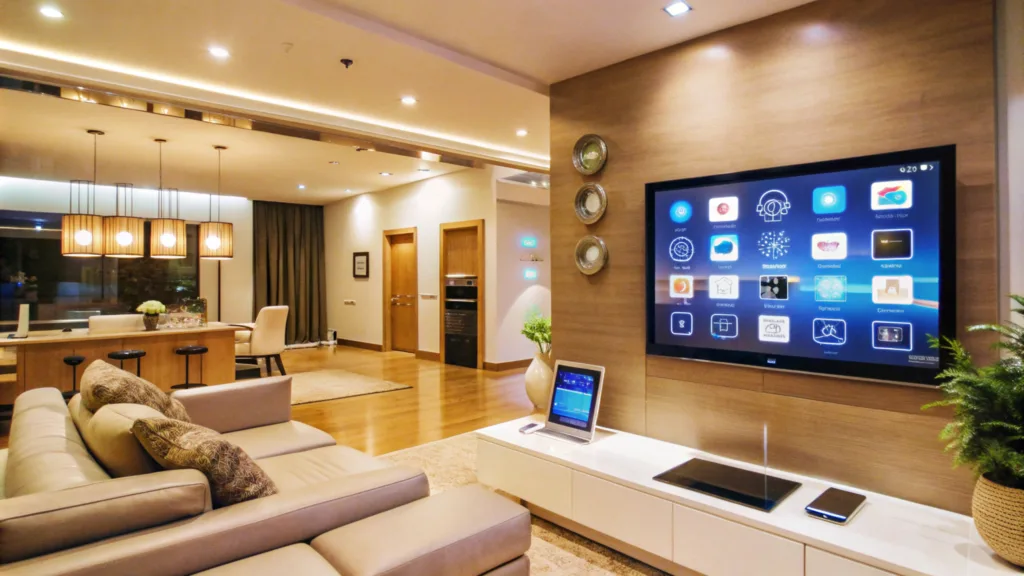
Comprehensive smart security systems monitor perimeter access, marine approaches, and structural integrity. Cameras with AI-assisted monitoring distinguish between wildlife and human presence, reducing false alarms. Smart locks control access to different areas. Environmental sensors monitor for water intrusion, which is critical in salt-air environments. Systems send real-time alerts to property managers, allowing rapid response to issues regardless of your physical location.
Connectivity Infrastructure
Satellite internet systems provide reliable connectivity even in remote locations. Modern Low Earth Orbit (LEO) satellite systems like those available through major providers offer latency low enough for video conferencing and real-time work. Fiber optic connections, where available locally, provide superior reliability and speed. Most serious island properties now implement redundant connectivity through satellite backup and local wireless networks, ensuring you’re never truly disconnected.
The Smart Lifestyle Mindset
Smart lifestyle trends extend far beyond technology specifications. They represent a fundamentally different approach to how affluent individuals structure their daily lives.
Privacy and Control
American executives and high-net-worth individuals consistently cite privacy as their primary motivation for island living. A private island or secluded estate offers something rare: complete control over your environment and access. Smart technology enables this privacy without isolation. You can manage business, communicate with family and colleagues, and maintain global connections while being physically distant from crowds and intrusion.
Time Sovereignty
The ability to design your own schedule is perhaps the most valuable benefit. Smart systems handle routine maintenance automatically. Automated watering, power management, and monitoring reduce the administrative burden of property ownership. This creates space for what actually matters to you.
Meaningful Experiences
Clients I’ve spoken with who’ve successfully transitioned to island living consistently report that the lifestyle shifts their priorities. Time with family, creative projects, reading, contemplation, and connection to nature become primary. The island isn’t an escape from your real life; it becomes your real life, with the mainland now feeling like the occasional business trip.
Values Alignment
For many buyers, regenerative and sustainable practices matter deeply. Island living through a smart lifestyle lens allows you to invest your resources and time in ways that align with your environmental values. You’re not consuming discretionary luxury that damages ecosystems. You’re building a lifestyle that increases local economic benefit, preserves natural systems, and demonstrates that luxury and responsibility are compatible.
Citizenship and Residency Programs
Before you invest heavily in island property, understand the legal pathways. Different islands offer different options, and these programs have real implications for tax treatment, property ownership, and long-term security.
Bahamas Residency
The Family Island Residency program allows foreign nationals to obtain residency by purchasing property valued at $500,000 or more. This is straightforward and doesn’t require citizenship. You can live on your property permanently while maintaining your US citizenship and passport. Residency is relatively simple to obtain and can be passed to descendants. However, Bahamas residency doesn’t provide citizenship, and the Bahamian government retains property ownership limitations in some contexts.
Antigua and Barbuda Citizenship
Several Caribbean nations offer citizenship by investment programs. Antigua and Barbuda offers pathways through real estate investment ($250,000 minimum) or donation programs. Citizenship provides a second passport and potential tax benefits. However, the US still taxes citizens on worldwide income regardless of where they live, so tax benefits are limited for Americans. The primary advantage is strategic diversification of citizenship and potential visa-free travel benefits.
Turks and Caicos Residency
Turks and Caicos offers residency through significant property investment. The threshold is higher than Bahamas, but residency is straightforward. The jurisdiction is tax-efficient and politically stable, attracting serious investors.
US Virgin Islands Residency
For Americans seeking to avoid complexity, USVI residency through Act 60 programs offers actual tax benefits. You can establish residency and claim benefits including exemptions on capital gains and interest income if you meet specific requirements. This is perhaps the most tax-advantaged option for Americans, though it requires genuine relocation to US territory.
I recommend consulting with international tax attorneys and residency specialists before committing to property purchase. The legal and tax implications are substantial and location-specific.
The 2026 Market Landscape
Several significant trends are shaping island real estate and smart living in 2026.
Private Island Scarcity and Value
Truly private islands available for purchase are limited. As of 2026, fewer than 10,000 private islands remain available globally, and only a few hundred in the Caribbean. Demand from ultra-high-net-worth individuals significantly exceeds supply. This scarcity is driving values upward, making early positioning strategically valuable.
Regenerative Design as Standard
Properties without renewable energy, water management, and sustainability features are increasingly difficult to finance and insure. Lenders and insurers now evaluate climate resilience and regenerative systems when assessing property value and risk. This shift is accelerating property upgrades and making green features essential rather than optional.
Remote Work Permanence
The normalization of remote work has extended beyond tech companies. Executives across industries now operate from distributed locations. This has created sustained demand for island properties among serious business professionals, not just retirees. The buyer profile is shifting toward working-age entrepreneurs and executives, not just post-career individuals.
Caribbean Political Stability Emphasis
Buyers increasingly prioritize political and economic stability over lowest cost. This has benefited established destinations like the Bahamas, Turks and Caicos, and US Virgin Islands while making less stable jurisdictions less attractive. Serious investors are willing to pay premiums for jurisdictions with reliable legal systems and political continuity.
Real Estate as Lifestyle Infrastructure
The framing of island property has shifted. Rather than pure investment vehicles, properties are increasingly viewed as lifestyle infrastructure. The question isn’t “How much will this appreciate?” but “What kind of life does this enable, and is that worth the investment?” This mindset shift attracts more stable, long-term owners and reduces speculative flipping.
Practical Challenges and Honest Limitations
I owe you honesty about the real difficulties of island living, not just the highlights.
Isolation and Social Life
Island living can be genuinely isolating if you’re unprepared for reduced social interaction. Proximity to community, cultural activities, and diverse social opportunities varies dramatically by location. Exuma Cays feels remote; Nassau or St. Croix offer more social engagement. Consider whether your chosen island supports the social life you actually want, not just the one you imagine.
Healthcare Access
Most Caribbean islands lack specialized medical facilities. Serious illness or emergency often requires mainland evacuation. This is manageable if you’re in good health and have evacuation insurance, but it’s a real limitation. Proximity to quality healthcare varies significantly by location. US Virgin Islands have better access than more remote Caribbean islands.
Weather and Climate Risk
Hurricane season runs June through November. Modern building codes and insurance can mitigate risk, but the threat is real and affects insurance costs and seasonal patterns. Some properties are damaged every few years despite advanced construction. This isn’t a deal-breaker for most buyers, but it’s important to budget realistically for repairs and temporary displacement.
Supply Chain Challenges
Importing goods, materials, and services is more expensive and time-consuming on islands. A plumbing emergency might require waiting for specialized parts. Luxury goods and international brands are more expensive. If you’re accustomed to the convenience of mainland living, this can be frustrating.
Regulatory Uncertainty
Regulations regarding property ownership, residency, and taxation can change. While established jurisdictions are relatively stable, no Caribbean jurisdiction is absolutely secure against policy changes. Political shifts can affect tax treatment or property rights unexpectedly.
Making the Decision
If you’re seriously considering smart island living, move beyond fantasy into practical assessment.
Financial Readiness
Do you have sufficient liquid assets beyond the property purchase price to cover acquisition costs (legal fees, inspections, closing costs), ongoing operational expenses, and unexpected repairs? A prudent rule of thumb: have at least 2 years of annual operating costs ($300,000 to $500,000 for most properties) available as reserves.
Work and Income
Can your income sources operate remotely? Do you have sustainable revenue streams that don’t depend on physical location? Is your professional network portable? If your career requires constant US presence, island living is significantly harder.
Family and Social Considerations
Does your family support this transition? Will children’s education be compromised or enhanced? Do you have meaningful social connections, or does your island choice offer community you’d value? Island living is wonderful for individuals and couples; families with school-age children need different considerations.
Health and Lifestyle
Are you in good enough health that limited medical access is acceptable? What activities bring you fulfillment? Does your island choice offer these experiences? If you’re a person who needs constant cultural stimulation, restaurants, and nightlife, many islands will feel limiting.
Timeline and Testing
Before purchasing, spend extended time on your target island. Don’t visit for a week in perfect weather. Stay for a month during different seasons. Rent properties to experience daily life realistically. Understand what you’re actually choosing, not what you’re fantasizing about.
Professional Guidance
Hire competent legal counsel in both your home jurisdiction and your target island. Consult international tax advisors. Work with real estate professionals who specialize in island properties. These professional costs ($5,000 to $25,000) are investments in avoiding much larger mistakes.
Comparison Table: Smart Lifestyle Trends
| Destination | Property Range | Flight Time (hrs) | Residency Path | Tax Advantages | Best For |
|---|---|---|---|---|---|
| Exuma, Bahamas | $2.5M to $8M | 2.5 to 3 | Family Island Residency | Minimal for Americans | Privacy, proximity, established market |
| St. Croix, USVI | $1.5M to $4M | 3.5 to 4 | Act 60 (genuine benefit) | Capital gains, interest exemptions | Tax-advantaged lifestyle |
| Turks and Caicos | $3M to $10M | 3 to 4 | Investment Residency | Moderate benefits | Stability, growth potential |
| Eleuthera, Bahamas | $1.5M to $4M | 1.5 to 2 | Family Island Residency | Minimal for Americans | Affordability, seclusion |
| Antigua | $2M to $6M | 3.5 to 4 | Citizenship by Investment | Moderate benefits | Diversified citizenship, stability |
FAQs About Smart Lifestyle Trends
1. Can I truly work remotely from an island?
2. What’s the realistic timeline for moving to island living?
3. How do I maintain American business interests while living on an island?
4. Is island living for families with children?
5. What happens if I decide island living isn’t for me?
6. How do I protect my privacy while maintaining global connections?
A Final Perspective
The honest answer is that 2026 presents a meaningful window. Property values remain accessible compared to historical peaks. The technology enabling comfortable, sustainable island living has matured. The legal frameworks supporting residency are established and working. The global market remains stable, if uncertain in places.
But the window is narrowing. Scarcity is real, and demand from high-net-worth individuals globally is increasing. Properties that could be purchased for $3 to $4 million today will likely command $4 to $5 million within three years. Not because of dramatic appreciation, but because fewer islands are available and more serious buyers are competing for them.
The real question isn’t whether island living is trending. It is. The question is whether you’re willing to do the psychological and practical work of actually moving beyond your current life into something genuinely different. Smart lifestyle trends are enabling the infrastructure; they can’t provide the personal readiness.
If you’re reading this and feeling that pull toward something more aligned with your values, more connected to natural rhythms, more intentional about how you spend your time and resources, then island living deserves serious consideration. Start with extended visits. Talk with people actually living this lifestyle. Consult professionals. Move slowly and deliberately.
The islands aren’t going anywhere. But the properties that truly offer smart, sustainable, private living are becoming rarer. I’d encourage you to explore seriously and thoughtfully.
What aspect of island living appeals most to you? Are you drawn by privacy, sustainability, the business opportunity, or something else entirely? I’d love to hear from you in the comments below. Your perspective matters as we collectively reimagine what luxury and lifestyle actually mean in 2026.
Warmly,
Alison Rosen Editor-in-Chief, Eden Isle
For deeper exploration of wellness retreats, sustainable travel, and luxury island resources, explore our comprehensive guides on edenisle.net.
2 thoughts on “Smart Lifestyle Trends Reshaping Luxury Island Living in 2026”