
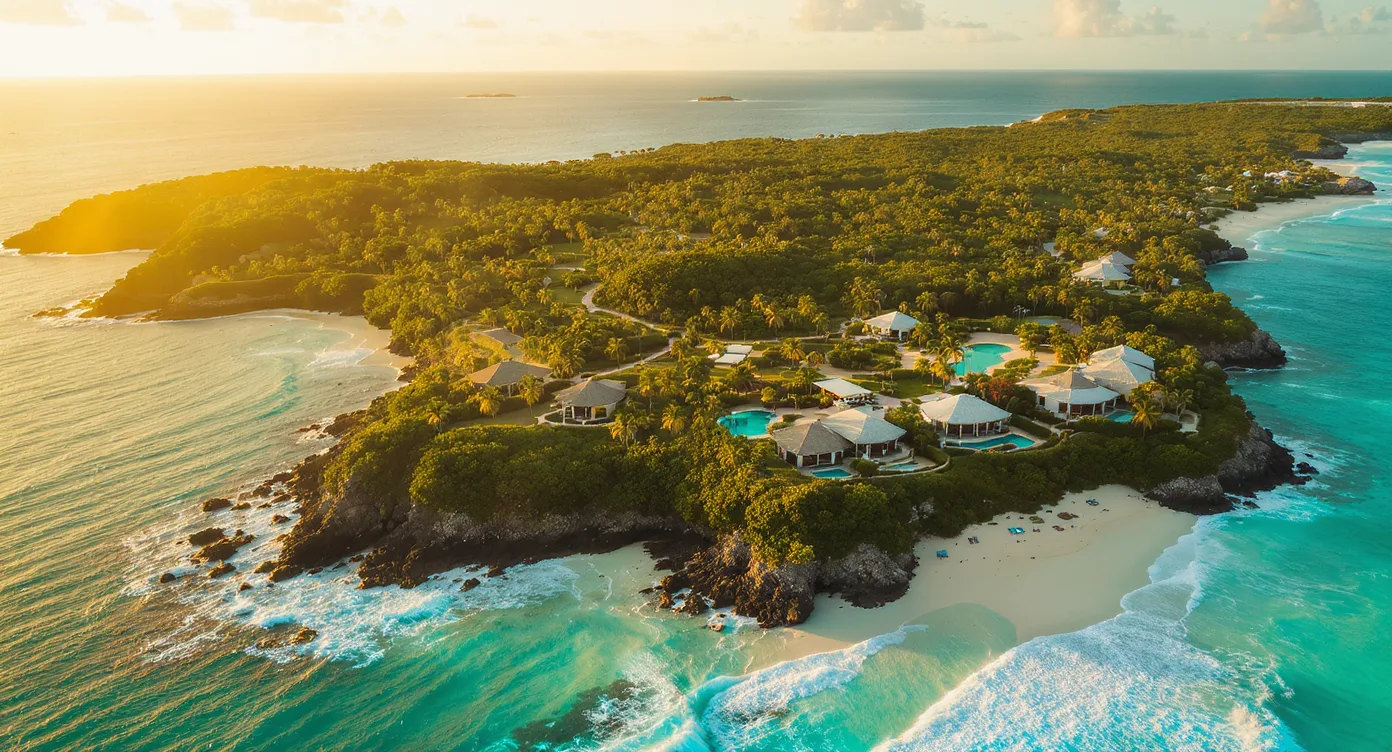
Small Luxury Hotels of the World: There’s a particular kind of silence you notice at dawn in a small luxury hotel. Not the silence of emptiness, but of intentional restraint. You wake in your suite overlooking a private cove in the Caribbean, and instead of the distant thrum of a thousand other guests, you hear only waves. The espresso machine hums softly as your butler prepares your morning ritual. No bustling corridors. No crowds at breakfast. Just you, impeccable service, and the kind of peace that costs more than you’d pay for a sprawling five-star resort, yet feels like the most natural investment you’ve ever made.
This isn’t a fantasy. It’s the reality driving affluent Americans toward small luxury hotels of the world in 2026.
For decades, bigger meant better. The 500-room oceanfront palace with its championship golf course and nightly entertainment seemed like the ultimate luxury. But something shifted. High-net-worth individuals, after years of business travel and resort standardization, craved something genuine. They wanted authenticity, privacy, and experiences that money shouldn’t instantly spoil. They wanted to feel like insiders, not guests on a roster.
The small luxury hotel sector has become a quiet revolution. Properties with 10 to 50 rooms, owned by visionaries rather than corporations, are redefining what luxury actually means. And for Americans specifically, the timing couldn’t be better. Travel accessibility from major US hubs, favorable dollar strength, and a growing appetite for meaningful experiences over material excess have positioned small luxury properties across the Caribbean, Central America, and beyond as the most coveted addresses for the discerning traveler and the serious property investor.
Why now? Because the pandemic fundamentally rewired how we view space, time, and value. Remote work became real. Privacy became precious. Authenticity became currency. A sprawling mega-resort with 600 rooms and assembly-line dining experiences now feels exhausting rather than luxurious. Meanwhile, a 20-room property on a private island where the owner personally greets guests and the chef remembers your dietary preferences without a briefing book? That feels like coming home.
Small Luxury Hotels of the World: The Rise of Regenerative Luxury
The small luxury hotel market didn’t just grow in 2026. It fundamentally evolved. Regenerative travel moved from fringe conversation to investment priority. This means properties aren’t just minimizing harm to ecosystems; they’re actively healing them.
A five-room overwater villa property in Southeast Asia might employ a marine biologist on staff. A Caribbean boutique hotel could fund coral restoration while guests snorkel directly above restored reef systems. This isn’t marketing theater. Serious investors and affluent travelers now expect measurable environmental impact alongside exceptional service.
For American buyers, this matters profoundly. The demographic now acquiring or investing in small luxury hotels has accumulated wealth while developing values. They don’t want to rest their heads in paradise while contributing to its destruction. They want the status of ownership paired with genuine stewardship.
The economics of this shift fascinate me. A 15-room boutique property with intentional sustainability practices doesn’t compete on occupancy rates like larger hotels. Instead, it competes on desirability. Owners can charge premium rates precisely because guests are finite, spaces are intimate, and impact is measurable. For American investors, this creates a different risk profile than traditional hospitality. You’re not chasing volume; you’re cultivating scarcity and exclusivity.
Also read:- This Cook Islands Resort Made Me Cancel My Return Flight
What Defines Small Luxury Hotels vs. Traditional Resorts
The distinction matters more than semantics. Here’s what separates true small luxury hotels from boutique properties pretending at sophistication:
Scale & Intimacy: Small luxury hotels typically operate 8 to 50 suites. This isn’t arbitrary. At this scale, ownership knows guests by name within hours. Staff ratios favor one employee per guest or better. The experience becomes bespoke rather than standardized. You’re not one of 300; you’re one of 20.
Curation Over Collection: Big resorts pursue breadth: multiple restaurants, spas, activity centers. Small luxury hotels obsess over depth. One exceptional restaurant. One world-class spa sanctuary. One remarkable activity hub. Everything is chosen and managed with intensity that corporate structure makes nearly impossible.
Location Strategy: While mega-resorts sprawl across developed tourism infrastructure, small luxury hotels often occupy distinctive, sometimes remote positions. A boutique property might sit on a private peninsula accessible only by boat. Another crowns a clifftop where building beyond a certain footprint is prohibited. The location itself becomes the luxury.
Ownership Presence: At larger hotels, the owner is an entity. At small luxury properties, the owner is often visibly present. This changes everything. Service quality becomes personal accountability. Design choices reflect genuine taste rather than market research. Guest satisfaction matters not because it affects quarterly earnings but because the owner’s reputation is on the line.
Price Architecture: Traditional resorts achieve profitability through volume. Small luxury hotels achieve it through premium pricing. A mid-tier international resort might charge $400 per night across 300 rooms. A small luxury property might charge $2,500 per night for 15 rooms. The total revenue streams are closer than you’d expect, but the profit margins, occupancy flexibility, and sustainability are entirely different.
Prime Destinations for Americans
For affluent Americans, geography matters enormously. Flight accessibility, time zone convenience, regulatory environment, and real estate stability all factor into the decision.
Caribbean & Bahamas
The Caribbean dominates small luxury real estate for American buyers, and it’s easy to understand why. A four-hour flight from Miami puts you in paradise. The Bahamas, Turks and Caicos, and the US Virgin Islands offer American citizens regulatory familiarity and stable property ownership. Time zone overlap means you can conduct business while island-based.
Properties here range considerably. A five-room intimate resort in Turks and Caicos might run $8 to $12 million. A 20-room boutique property with infrastructure and established operations could reach $30 to $50 million. These are generalized ranges; actual values depend entirely on location, operations track record, and sustainability credentials.
What appeals to buyers? The Caribbean small luxury market attracts those who understand the economics. Occupancy-dependent revenue is manageable here because the destination itself is recession-resistant. Wealth management clients, corporate retreats, and luxury tourists fill rooms consistently. Plus, the seasonal rhythm is manageable.
Central America
Costa Rica, Belize, and Panama have emerged as secondary markets for thoughtful investors. Properties cost less than Caribbean equivalents. Environmental credentials run deep. And the market, while competitive, feels less saturated than island destinations.
I’ve spoken with several buyers who chose Central America specifically because they believed in the next decade’s appreciation potential. A small luxury property in Costa Rica today might appreciate significantly as the region builds its reputation for regenerative luxury.
Southeast Asia
The Maldives, Thailand, and Indonesia’s boutique hotel scene attracts different buyers. American investors here typically have international operational experience and patience for regulatory complexity. Properties often cost less upfront but demand more hands-on management or trusted local partnership.
Flight accessibility from US coasts is manageable (18 to 24 hours), making these properties better suited for occasional visits than primary ownership involvement.
Mediterranean
Small luxury properties in Greece, Croatia, and southern France represent a different asset class. They’re often pricier, appeal to European wealth, and offer heritage appeal alongside operational stability. For Americans, these work well as luxury investment assets held by trust or LLC structures, visited seasonally.
| Destination | Typical Property Cost | Flight Time from NYC | Occupancy Season | Key Appeal for Americans |
|---|---|---|---|---|
| Bahamas | $12-25M (5-15 rooms) | 3.5 hours | Year-round | Accessibility, regulatory ease, USD stability |
| Turks & Caicos | $10-20M (4-12 rooms) | 4 hours | Year-round | Privacy, stunning beaches, American stability |
| Costa Rica | $6-15M (8-20 rooms) | 5 hours | Nov-April | Value, sustainability, adventure positioning |
| Maldives | $8-18M (10-25 rooms) | 20 hours | Nov-March | Uniqueness, overwater positioning, luxury brand |
| Greece | $15-35M (12-30 rooms) | 10 hours | April-October | Heritage, Mediterranean appeal, wine/culture |
Real Costs, Real Returns
Let’s address what everyone wants to know but feels uncomfortable asking: what does this actually cost, and what does it return?
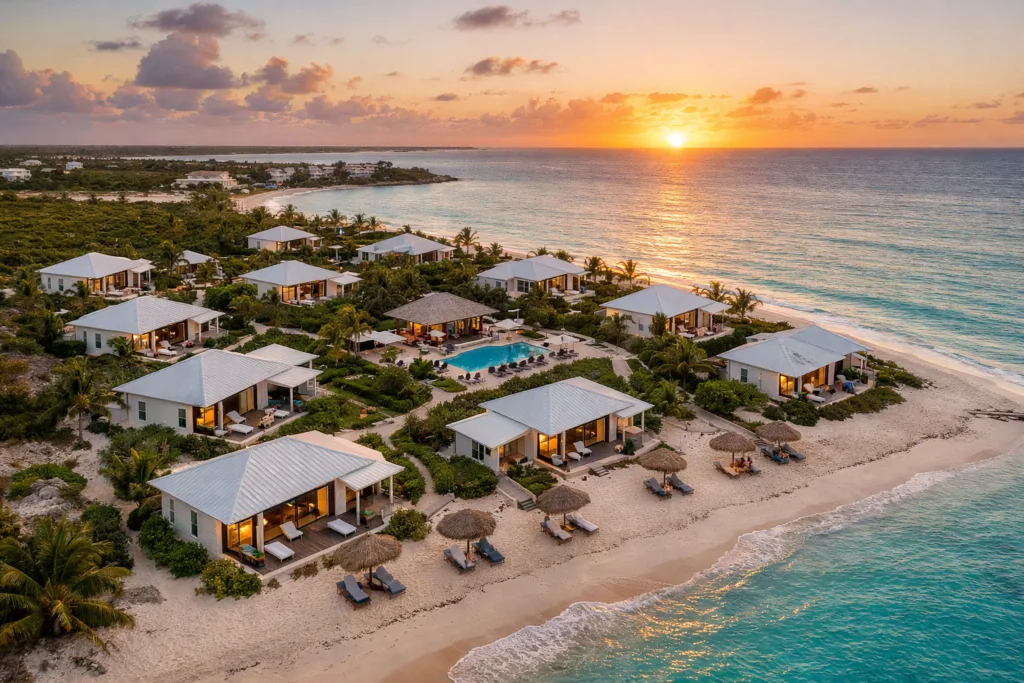
Acquisition costs vary wildly based on operation status. A turnkey property already generating revenue runs more than a raw location or troubled operation. A small luxury hotel with strong management, proven bookings, and regenerative credentials might command a 6 to 8 times EBITDA multiple. A problematic property or raw land could be half that.
But the actual investment extends beyond purchase price. Americans buying into Caribbean or Central American properties should budget for:
American currency strength influences everything here. A $15 million property acquisition combined with construction, staff training, and working capital easily reaches $20 million before opening. These numbers matter because they separate serious investment from fantasy.
Annual operating costs for a 20-room small luxury property typically run $1.2 to $2 million, depending on location and labor costs. This includes staff salaries, utilities, maintenance, insurance, marketing, and management systems.
Revenue depends entirely on occupancy and nightly rate. A property achieving 70% occupancy at $1,500 per night across 20 rooms generates roughly $7.7 million annually. After operating expenses, you’re looking at 45 to 55% operating margins if managed efficiently. These economics work. That’s why the small luxury sector attracts serious capital.
However, here’s what Americans often underestimate: the management component. Owning a small luxury hotel isn’t passive income. Even with a capable general manager in place, the owner typically oversees major decisions, guest experience quality, and financial performance. Some successful owners spend 20 to 30% of their time on operations. Others employ full-time management companies and visit seasonally. Both models work, but they’re different commitments.
Sustainability & Regenerative Travel
If you’re considering small luxury hotel ownership or investment, understand that sustainability is no longer optional. It’s expected, measured, and factored into valuation.
Regenerative properties go beyond “low environmental impact.” They actively improve ecosystems. This might mean:
A seven-room clifftop property in Bali restored a surrounding forest reserve while educating guests about local reforestation. That property sells significantly above comparable properties without environmental credentials. Similarly, a 12-room island resort that funds marine conservation directly benefits from guest interest in meaningful travel. The financial benefit is real.
For American buyers, this alignment matters psychologically and economically. You can rationalize your ownership as stewardship. You can market the property to an expanding demographic of conscious travelers. And interestingly, regenerative practices often reduce operating costs long-term. Solar installations, water recycling systems, and low-impact construction lower utility expenses and insurance premiums.
Several major investment platforms now rank properties by sustainability metrics. Vladi Private Islands and similar brokers incorporate environmental credentials into valuations. This is relatively new (last five years), but it’s permanent. Properties certified by organizations like Green Key or equivalent tourism boards command premium positioning.
For Prospective Buyers: What to Evaluate Deeply
I’ve watched smart investors make excellent acquisitions and capable investors stumble badly. The difference usually isn’t capital. It’s due diligence.
Financial Reality Check Request three years of audited financials. Project conservatively. Most small luxury properties can increase revenue through modest rate adjustments and improved occupancy, but assuming your new management will suddenly achieve 85% occupancy or command $3,000 per night when the property previously averaged $1,500 is dangerous.
Operational Capacity Visit unannounced during high season. Not to catch problems, but to understand the actual flow. Watch how staff handles guests. Observe the kitchen during service. Check maintenance details. Are doors sticky? Is landscaping manicured or merely acceptable? Small luxury demands operational excellence. If the property doesn’t already embody it, you’ll fight uphill to implement it.
Regulatory & Legal Environment This cannot be overstated. Ownership structures differ dramatically between Caribbean islands. Some offer straightforward freehold ownership; others require specific citizenship or percentage local ownership. The Bahamas has different regulations than Turks and Caicos. Costa Rica has different rules than Panama.
Hiring a local lawyer who specializes in foreign real estate investment is non-optional. This costs $5,000 to $15,000 but prevents decisions costing millions.
Environmental Credentials What certifications does the property hold? What conservation partnerships exist? How are environmental claims measured and documented? Greenwashing is real. An honest property can quantify its impact: coral restored, carbon offset, renewable energy percentage. Generic “eco-friendly” claims deserve skepticism.
Staff Stability & Training Labor is often the biggest cost factor and the biggest vulnerability. What’s turnover like? Are key positions stable? Is training documented? A property dependent on a single exceptional manager is high-risk. You want institutional knowledge spread across the team.
Market Positioning Why would someone choose this property over competitors? What’s genuinely differentiated? “Luxury” and “beautiful location” don’t count. What concrete advantage exists? Is it a unique activity offering? Unmatched privacy? Heritage and culture? Cutting-edge sustainability? The answer matters tremendously.

The Market in 2026: Trends Shaping Small Luxury
Several distinct trends are reshaping how small luxury properties operate and appreciate:
The Citizenship Program Effect Caribbean nations offering citizenship or residence pathways through real estate investment have accelerated property valuations. While controversial, these programs drive capital into the region. Properties positioned near citizenship opportunities benefit from both operational demand and speculative interest. Americans often overlook this, but European and Asian wealth is relocating to Caribbean real estate partly through these programs.
Authenticity as Luxury The concept of “authentic luxury” has evolved significantly. Guests increasingly prefer a property reflecting genuine place and culture rather than generic international luxury design. A small hotel that feels deeply connected to its locale outperforms sterile modernism. This favors smaller properties operated by owners with real ties to their communities.
Private Island Premiums Availability of true private island properties is finite. As awareness of small luxury grows, private island properties command extraordinary premiums. A 10-room private island property in the Bahamas might sell for 30 to 40% above comparable mainland properties. Scarcity drives value.
The Wellness Integration Post-pandemic, wellness is now foundational rather than optional. Properties that weave wellness throughout operations, not just in spa offerings, perform better. This might mean partnering with leading wellness practitioners, offering fitness programs, emphasizing local cuisine quality, or providing mental health support tools. Guests expect it.
Digital Luxury Paradox Interestingly, as technology advances, guests increasingly value spaces free from it. Small properties can compete by offering genuine digital detox experiences without feeling gimmicky. “No WiFi” is becoming a selling point, not a liability.
Challenges
Ownership of small luxury properties isn’t all overwater villas and sunset cocktails. Several challenges deserve candid discussion.
Market Vulnerability: Small properties with 8 to 20 rooms have limited revenue streams. Five empty rooms in a 15-room property represent 33% revenue loss. Large resorts spread this impact across 300 rooms. If your market softens or a competing property opens nearby, the financial impact is acute. Due diligence on local market saturation is critical.
Staffing Challenges: Labor costs in developing nations are rising. Skilled hospitality staff increasingly prefer positions at mega-resorts offering stability and benefits. Retaining quality staff at a small property requires competitive compensation, meaningful work, and leadership that genuinely cares. This is harder than it sounds and more expensive than projections typically assume.
Seasonal Volatility: Most Caribbean properties follow a distinct high season (December through March) and low season (June through September). A property dependent on occupancy revenue faces predictable cash crunches. Successful owners manage this through cash reserves and off-season operational adjustments.
Regulatory Changes: Environmental regulations and tax policies shift. A property compliant today might face expensive upgrades tomorrow. Caribbean governments are increasingly implementing green building standards. What seemed like unnecessary expense five years ago is now mandatory. Budget conservatively for regulatory evolution.
Operational Complexity Across Time Zones: Unless you live on the property, managing operations from the United States creates time zone and distance challenges. Even with excellent managers, major decisions require owner input. Some owners employ full-time property management companies, which adds 10 to 15% cost but provides necessary structure.

Practical Next Steps for Serious Investors
If you’ve read this far, you’re likely considering serious involvement in small luxury hotel ownership or investment.
Step One: Clarify Your Motivation Are you seeking operating income? Capital appreciation? A semi-retirement lifestyle property? A place to house wealth? These questions dramatically affect what property type you pursue. Someone seeking capital appreciation might favor emerging markets like Costa Rica. Someone seeking lifestyle involvement might prefer a Caribbean property they can visit seasonally.
Step Two: Assemble Your Advisory Team Before looking at specific properties, hire professionals. This includes a real estate attorney specializing in foreign investment in your target region, a CPA experienced with international real estate, and ideally a hospitality consultant who can evaluate properties objectively.
This costs $15,000 to $30,000 upfront but prevents catastrophic mistakes.
Step Three: Define Your Target Profile Establish criteria before browsing properties. How many rooms? Which region? Budget range? Climate preferences? Environmental positioning? This filter prevents emotion-driven acquisition, which ruins more investments than market downturn.
Step Four: Explore Legitimate Brokers Several specialized brokers focus on small luxury properties:
- Vladi Private Islands (German-based, specializes in private island properties globally)
- James Edition (luxury real estate marketplace with robust small hotel inventory)
- Sotheby’s International Realty (traditional luxury broker with hospitality division)
- PrivateIslandsOnline.com (curated private island inventory)
- Island Select or similar Caribbean specialist brokers
These brokers vary in quality and inventory, but all can provide property listings with financials, operational history, and professional guidance.
Step Five: Visit Properties Properly When viewing potential acquisitions, bring your hospitality consultant and local attorney. Stay overnight as a guest, not during a special showing. Eat at the restaurant. Spend time observing. Ask staff questions privately about satisfaction and stability. The property’s true nature emerges through extended presence, not polished presentations.
Step Six: Model Conservative Scenarios Project revenues using 60% occupancy (not the owner’s claimed 80%), and build in 15% annual operating cost increases. These conservative models will often show you why a property isn’t worth the price or where there’s real opportunity.
FAQs
1. Can Americans legally own small luxury hotels abroad?
2. What’s the typical return on investment for small luxury hotels?
3. How involved do I need to be as owner?
4. Is small luxury hotel ownership a tax shelter?
5. What’s the difference between buying an operating property versus developing raw land?
6. How does climate change impact small luxury properties?
The Deeper Opportunity
Here’s what I’ve observed covering this market for years: the most satisfied small luxury hotel owners aren’t always those with the highest returns. They’re the ones who found a property aligned with genuine passion.
An owner who believes in marine conservation runs a Maldives property differently than someone chasing pure profit. The first attracts mission-aligned guests and staff, creating an exceptional community. The second chases occupancy and margins, fighting constant competition.
Similarly, owners who genuinely love their location, understand the culture, and invest in community relationships build resilient, beloved properties. Those treating it as a distant investment vehicle, managed entirely by staff, often struggle with staff retention and authenticity.
The financial opportunity is real. But the actual reward emerges in building something meaningful. A small luxury property well-executed becomes a gathering place for remarkable people, a steward of environment, a stabilizing force in a local community, and a source of genuine pride.
This is why small luxury hotel ownership appeals to the demographic driving this trend: people with sufficient capital to own anything, choosing to own this.
Your Paradise Awaits Consideration
The era of enormous, impersonal mega-resorts is quietly ending. Not because they’re disappearing, but because they’re becoming invisible to the demographic that drives luxury investment. Discerning travelers and serious investors increasingly choose intimate properties with authentic vision, environmental purpose, and genuine hospitality.
For Americans specifically, the opportunity is remarkable. Geographic proximity to Caribbean properties, favorable exchange rates, regulatory familiarity in many jurisdictions, and a deep population of high-net-worth individuals creates ideal conditions for small luxury hotel investment.
Whether you’re envisioning seasonal retreat ownership, exploring semi-retirement through operating a beloved property, or building wealth through hospitality investment, the foundation is research, expert guidance, and ruthless honesty about motivation and capacity.
The properties exist. The market opportunity is genuine. What remains is connecting your vision with the right property, professional team, and patient capital.
I’ve spent years watching this market evolve. The best decisions I’ve observed come from buyers who took time to understand the landscape before acting. This article is my attempt to compress that education for you. The next step is your decision.
Do you have experience with small luxury properties or thoughts on what genuinely differentiates a resort worth premium pricing?
Warmly, Alison Rosen Editor-in-Chief, Eden Isle
P.S. For those serious about exploring this market further, our upcoming guide to wellness retreats in private island settings might resonate. It explores how properties are weaving regenerative practices with guest wellbeing in fascinating ways.
1 thought on “Small Luxury Hotels of the World That Will Make Big Resorts Feel Ordinary”