
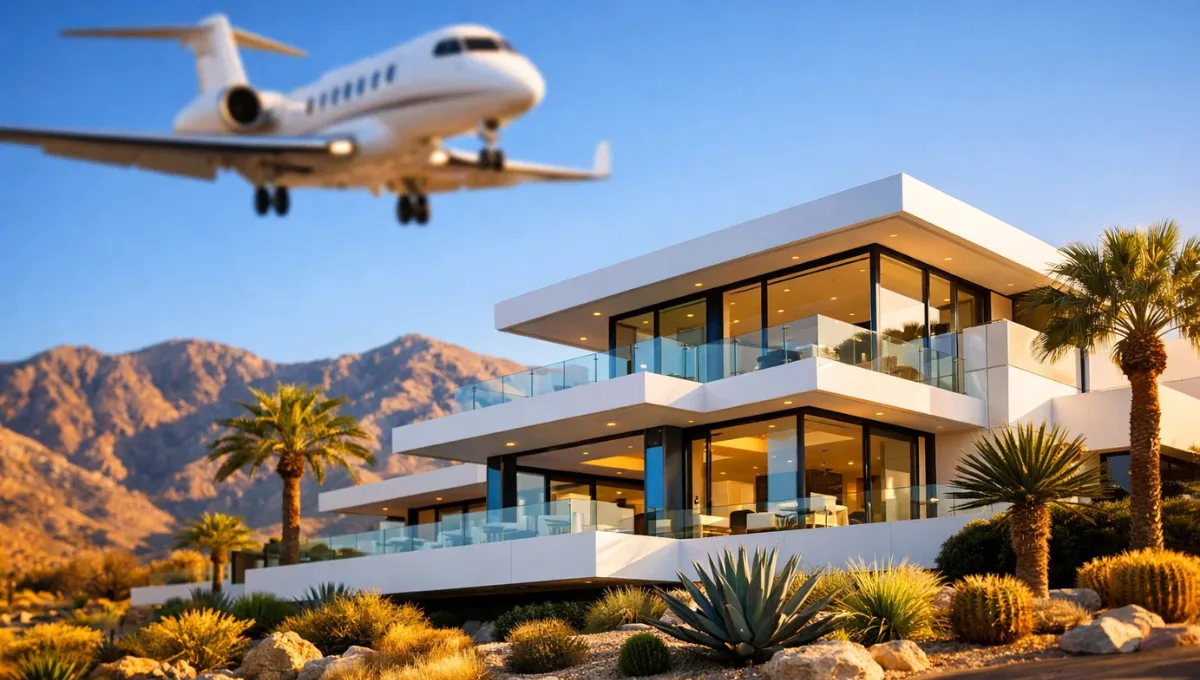
Luxury Modern Desert City: When Lori Loughlin and her husband sold their La Quinta estate in December for $16.5 million, real estate insiders recognized it for what it truly was: another signal that one of California’s most unassuming desert towns has quietly become a fortress of wealth. The couple had purchased the same property just four years earlier for $13 million in a private transaction, meaning their investment had appreciated by $3.5 million in a market where such gains now feel almost routine.
La Quinta, a modest desert community in Riverside County with fewer than 40,000 residents, has undergone a remarkable transformation. It has evolved from a quiet retirement destination into one of the most coveted addresses for America’s wealthiest individuals. What makes this shift particularly striking is how it has unfolded almost entirely under the radar, driven by whispered recommendations in private wealth circles rather than flashy marketing campaigns or developer promotions.
The phenomenon defies traditional real estate logic. In an era when many luxury markets have become increasingly crowded and visible, La Quinta has achieved something rare: it has attracted extraordinary wealth while remaining largely invisible to mainstream attention. The community now hosts some of the most prominent names in technology, entertainment, and business, all of whom have discovered something increasingly difficult to find elsewhere: the ability to build remarkable lives in complete privacy.
Tim Cook, the Chief Executive Officer of Apple, purchased a nearly $10 million property in the gated Madison Club community in 2019. The home spans approximately 10,000 square feet across five bedrooms and six bathrooms, featuring an executive office, professional-grade kitchens, and a custom infinity pool with mountain views that cost $150,000 to construct. His presence in the community validated what savvy real estate investors had begun to suspect: this desert location could accommodate serious wealth discreetly and comfortably.
Following Cook’s purchase, the community attracted an impressive roster of celebrity homeowners. Justin Bieber acquired a $16 million estate in the same gated community. Singer Adele owns property nearby. Kourtney Kardashian purchased a $12 million contemporary mansion with nine bathrooms, a custom wine room, and access to a Tom Fazio-designed golf course. Her mother, Kris Jenner, made a similar real estate move to the area. Music mogul Scooter Braun, supermodel Cindy Crawford, Nike co-founder Phil Knight, and actress Jenna Ortega all maintain residences in La Quinta.
Also read:- This Cook Islands Resort Made Me Cancel My Return Flight
This concentration of wealth and celebrity represents something genuinely unusual for a community of its size. Yet the appeal operates according to an inverted logic compared to traditional celebrity real estate markets. Nobody comes to La Quinta for the nightlife, the red carpets, or the chance to be seen. The opposite is precisely the draw. When Justin Bieber visits his desert estate, he reportedly plays golf and relaxes largely free from paparazzi documentation. That fundamental shift signals something important about how ultra-wealthy individuals now define luxury living.
For decades, owning prestigious property meant displaying it prominently. Here, the truest expression of wealth is the ability to own exceptional property and remain completely invisible. The entire community structure has been designed to support that preference. Madison Club, Hideaway, Tradition, and The Quarry operate as fully gated enclaves with private entrances, restricted access, and architectural design protocols that actively discourage external visibility. A 10,000-square-foot mansion here might be oriented inward toward private courtyards and mountain vistas, with minimal street presence. The homes are designed to be invisible to the outside world.
This structural invisibility represents something far more valuable than traditional status symbols. For someone managing substantial financial portfolios and seeking to avoid public scrutiny, the ability to own transformative property while remaining undocumented becomes genuinely priceless. The gated community model eliminates the need for celebrity status updates, social media documentation, or visibility that comes with owning high-profile properties in places like Malibu or the Hollywood Hills.
The infrastructure supporting these wealthy residents extends well beyond residential real estate. The Thermal Club, located just minutes away, exemplifies the kind of specialized facility that serves this demographic. As one of the world’s most exclusive private motorsport clubs, it caters exclusively to members with significant car collections. The facility includes multiple racing tracks, a full service shop, and hospitality spaces designed for individuals who own vehicles worth more than most houses. Membership is selective, expensive, and signals a particular tier of wealth. Its proximity to La Quinta creates a discrete ecosystem within the broader community of exceptionally wealthy enthusiasts and collectors.
The Jacqueline Cochran Regional Airport in nearby Thermal provides something equally crucial for this demographic: private jet access within minutes of residential properties. For someone accustomed to flying private, commercial aviation becomes genuinely unthinkable. A personal aircraft requires a nearby facility offering sophisticated handling, maintenance, and secure hangaring. The Cochran Airport serves that function directly, eliminating the need for navigation through Los Angeles basin airport congestion and enabling wealthy homeowners to arrive at discrete private terminals rather than commercial hubs. For executives managing their time as their most valuable asset, this infrastructure investment alone justifies property acquisition in the area.
Golf serves as both recreational amenity and essential social infrastructure. The greater Coachella Valley hosts more than 200 golf courses, but La Quinta’s private clubs operate at a fundamentally different scale. Madison Club’s Tom Fazio-designed championship course functions simultaneously as athletic facility, social apparatus, and exclusive membership experience. Members don’t simply play golf; they conduct business, develop relationships, and integrate into a community of similar financial standing. The courses remain immaculate, never crowded, and rigorously exclusive by design. For wealthy individuals seeking both recreation and professional opportunity, these golf clubs provide invaluable value.
These amenities aren’t merely features tacked onto residential real estate. They represent integrated components of a complete lifestyle ecosystem specifically designed to serve high-net-worth residents. A buyer purchasing property in Madison Club isn’t simply acquiring a home. They’re gaining access to a comprehensive infrastructure network that compounds the overall value of their investment. This integrated approach distinguishes La Quinta from other desert communities and explains much of its appeal to serious wealth.
The real estate economics tell a compelling story when compared to coastal alternatives. In January 2026, the median home listing price in La Quinta stands at $875,000. However, this figure masks the true nature of the luxury market. The community currently lists approximately 188 homes priced above $1 million and roughly 24 properties valued above $5 million. Properties regularly exceed $20 million, with recent sales including estates listed at $22.9 million and $24 million. These trophy properties demonstrate that the ultra-luxury segment continues to command serious capital investment.
Yet here’s where the economics become genuinely compelling when compared to coastal alternatives. An identical home in Malibu, the Hollywood Hills, or Atherton would command double or triple the price. For Los Angeles and San Francisco buyers, La Quinta delivers more property, more land, more seclusion, and more amenities per dollar than anything available in proximity to major employment centers. That economic arbitrage opportunity has proven remarkably durable and continues to drive buyer interest.
Scarcity reinforces pricing power in the community. Real estate agents report that inventories in the highest quality gated communities turn over rarely. When a premium property does become available, demand is typically immediate and highly competitive. Multiple offers aren’t unusual. The combination of limited inventory and concentrated high-net-worth buyer interest creates a pricing environment where supply constraints matter more than traditional economic cycles. Properties that would sit on the market in other locations sell quickly and often above asking price.
This becomes particularly evident when comparing La Quinta to nearby Palm Springs and Indian Wells. Palm Springs skews toward younger, urban-oriented residents and attracts visitors seeking nightlife and entertainment, with midcentury modern architecture and a visible entertainment scene. Indian Wells functions as an established, more traditional community with smaller-scale luxury amenities. Palm Desert serves as the valley’s primary retail and commercial hub. La Quinta, by contrast, remains deliberately exclusive and residential, designed explicitly for people who have moved beyond the need for visibility or entertainment infrastructure. The audience here isn’t seeking a scene; they’re seeking the opposite.
The emergence of La Quinta as a luxury destination wasn’t accidental but rather resulted from several converging factors that made the timing opportune. Major regional events functioned as visibility engines that introduced wealthy buyers to the desert lifestyle and its potential. The Coachella Music Festival draws roughly 125,000 music fans annually, with many attendees traveling from the Bay Area, Los Angeles, and beyond. Stagecoach, the country music festival, attracts similar demographics and visitor profiles. The American Express PGA Tournament brings golf enthusiasts and celebrities to the valley every January, with many first-time visitors discovering the region’s lifestyle appeal during extended stays.
These events introduce affluent tourists to the genuine possibility of ownership. Someone attending Coachella from Los Angeles and staying in a desert villa discovers something Los Angeles doesn’t offer at comparable scale: abundant space, profound silence, and genuine peace. That experience, over time, often translates into a second home purchase, which can become a primary residence, which eventually integrates into a broader investment portfolio.
The visibility of celebrity ownership compounds this effect in unexpected ways. When affluent individuals discover that Tim Cook, Justin Bieber, and the Kardashian family own property in the same community, the social proof becomes powerful. This is particularly true among wealth tiers that have moved beyond public status display and now seek community validation from peer groups. The appeal operates through networks rather than traditional advertising, which amplifies its authenticity and effectiveness.
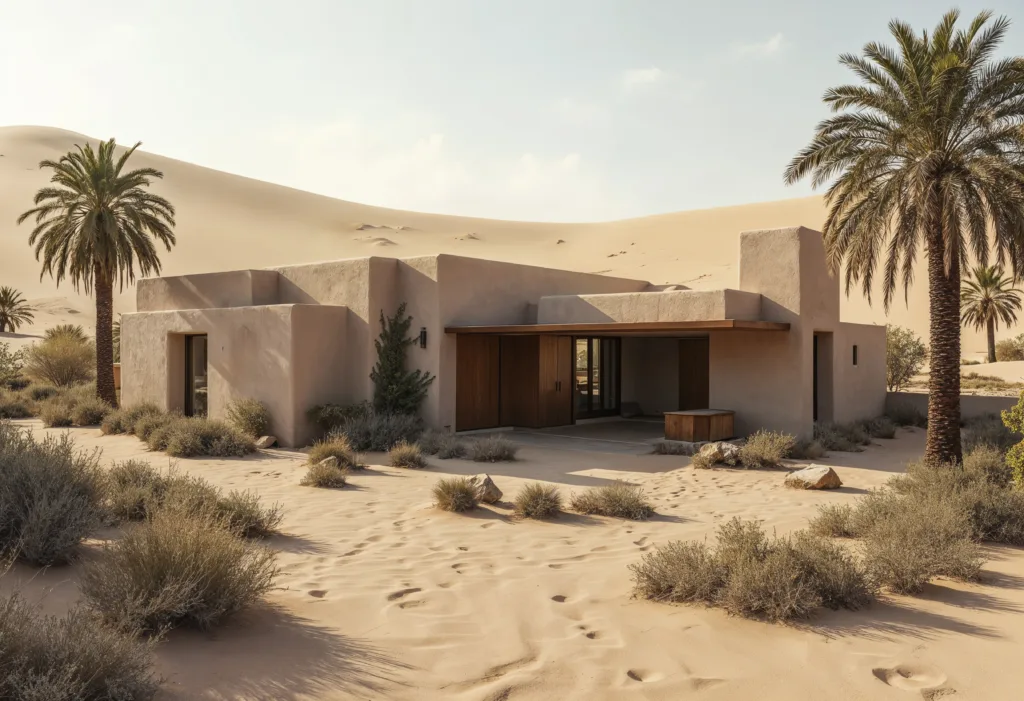
La Quinta’s transformation is part of a larger desert luxury city resurgence occurring across the American Southwest. Scottsdale’s luxury real estate market has soared in 2025, with total sales volume exceeding $6.32 billion annually. The city now ranks ahead of traditional Phoenix for overall transaction volume for the first time in recent history. Paradise Valley has appreciated roughly 30 percent year-to-date despite maintaining only 332 closed listings. These figures suggest that desert communities nationwide are experiencing genuine wealth migration and sustained investor interest.
Scottsdale’s appeal rests partly on infrastructure similar to La Quinta: world-class golf communities like Silverleaf, Desert Mountain, and Estancia offer gated, exclusive living experiences. North Scottsdale neighborhoods support median household incomes exceeding $173,000. The city has positioned itself successfully as balancing desert beauty with urban sophistication, offering both mountain views and access to refined dining, luxury shopping, and cultural amenities for residents who don’t want to sacrifice creature comforts.
Phoenix itself is undergoing significant luxury transformation. Projects like Ray Phoenix, a 26-story tower with 401 residential units scheduled for 2026 completion, showcase downtown revitalization efforts. The development’s modernist design and green architecture signal that desert cities are moving beyond dated imagery toward contemporary luxury expressions. These projects attract wealth that might previously have gravitated toward coastal markets.
Queen Creek, once primarily a family-oriented community and undeveloped land, has emerged as one of the East Valley’s fastest-growing luxury markets. Median home prices exceed $650,000, with many new builds ranging from $800,000 to $1.5 million or beyond. Custom estates with significant acreage are pushing past $2 million. Like La Quinta, Queen Creek offers space and exclusivity that coastal alternatives cannot match at comparable price points.
The broader emergence of luxury modern desert cities reflects something fundamental about how exceptionally wealthy individuals now define home and lifestyle. Traditional prestige markers like proximity to cultural centers or visible status have given way to metrics like privacy, space, environmental control, infrastructure specifically designed for discrete living, and community composition. A $20 million estate in a gated community where neighbors include other billionaires and successful entrepreneurs carries different social meaning than a $20 million penthouse in Manhattan, where ownership becomes immediately visible and subject to intense public discourse.
This shift accelerates with generational change in wealth accumulation patterns. Younger wealth, accumulated through technology, entertainment, and finance sectors, views luxury fundamentally differently than previous generations approached it. The trophy home designed to impress, the acquisition meant for public appreciation, has given way to the thoughtfully designed retreat optimized for quality of life and meaningful community. Desert cities like La Quinta deliver exactly that value proposition precisely because they’ve evolved from retirement destinations into year-round communities for working wealthy individuals who have engineered freedom from geographical constraints.

The structural conditions supporting this market transformation appear durable and show limited signs of reversing. Remote work has become permanent for many sectors and company types. Tax considerations regarding state income and property valuations remain constant. Climate data doesn’t change. The infrastructure serving high-net-worth residents continues improving. Meanwhile, coastal alternatives face increasing density, rising costs, and infrastructure constraints that make them substantially less appealing to individuals who have already moved beyond traditional status markers.
What makes La Quinta’s transformation particularly remarkable is that it has unfolded almost entirely through whisper campaigns in private clubs, recommendations among wealth advisors, and accumulated visibility of celebrity neighbors rather than through traditional marketing. By the time mainstream real estate publications and general media discovered the trend, the most desirable properties had already changed hands multiple times, and entry points had narrowed considerably.
The exclusivity created in this process became a significant source of value itself. Had La Quinta been heavily marketed and aggressively developed from the beginning, it would have become another luxury destination, differentiated by climate and golf amenities but not fundamentally different from other resort communities. Instead, its quietness and invisibility became its defining features. The fact that relatively few people outside wealthy circles knew about it made it exponentially more valuable to those inside that bubble.
This dynamic suggests something important about how luxury real estate markets actually function in 2026. The most coveted properties and communities that deliver genuine appreciation and authentic exclusivity may not be the ones receiving extensive marketing campaigns. They’re the ones being quietly discovered by people with sufficient wealth to influence property acquisition patterns without requiring traditional advertising support. La Quinta’s trajectory becomes a case study in how information actually flows through wealth networks and how markets function when they operate through private channels rather than public channels.
Also read:- Noria Robson Luxury Apartments Offer a Fresh Take on Modern Living
For anyone observing wealth patterns and real estate dynamics carefully, desert cities deserve serious attention. Not primarily for their weather or recreational amenities, but for what they signal about how the world’s most affluent now prioritize property ownership and lifestyle. The transition from visible wealth display to invisible wealth optimization represents a generational shift in how luxury property functions within broader portfolios and life priorities. La Quinta, despite its modest size and deliberately quiet profile, has become an unexpected laboratory where this transformation becomes visible to anyone paying close attention to these markets.
For potential investors and affluent individuals seeking to understand where serious wealth is concentrating and why, these desert communities offer clear answers. The movement toward privacy, space, and discretion appears structural rather than cyclical. The infrastructure supporting these preferences continues improving. The celebrity validation continues accumulating. And the scarcity of available premium properties continues driving valuations upward. For those positioned to participate in this market shift, the implications seem clear. The future of luxury living, it appears, is learning to remain quietly invisible.
The remote work revolution fundamentally altered the equation for where wealthy individuals could build their primary lives. The acceleration of hybrid and fully remote employment models, which intensified dramatically through the pandemic and has remained permanent for many sectors, liberated wealth holders from geographical constraints that had previously seemed fixed. An Apple executive no longer requires a Bay Area penthouse when quarterly board meetings happen through video conferencing. A music producer doesn’t need to maintain a residence within ten miles of a Los Angeles recording studio. This geographic freedom, while revolutionary in theory, didn’t immediately create mass migration to desert communities.
Instead, it enabled something more nuanced: the transformation of second homes into first homes, and the elevation of seasonal residences into properties demanding the same investment sophistication as permanent addresses. Wealthy individuals now could maintain their professional lives while living anywhere their preferences and financial considerations suggested. That flexibility proved genuinely transformative for markets like La Quinta that offered amenities, privacy, and value propositions that coastal alternatives simply could not match.
Tax dynamics layered onto this foundation and created additional incentive structures. California’s state income tax, consistently among the nation’s highest, has made southern California desert properties increasingly appealing to wealth managers from Los Angeles, Orange County, and the San Francisco Bay Area. For someone managing substantial financial portfolios and significant investment returns, the difference between California’s state income tax burden and alternative jurisdictions like Texas or Nevada becomes genuinely quantifiable. A single property transaction of $20 million in a lower tax jurisdiction can translate into hundreds of thousands of dollars in annual tax savings across a full portfolio.
Yet La Quinta operates within California, which means residents cannot escape state income taxes while remaining California residents. However, the property cost differential between La Quinta and coastal alternatives is substantial enough that buyers gain significant financial advantage. For someone spending $20 million on an estate, that same capital in Malibu or the Hollywood Hills would purchase substantially less property, less land, and minimal privacy. The pure arbitrage opportunity between coastal and desert markets has proven remarkably durable.
Climate functions as a quieter yet equally powerful motivating force. La Quinta’s year-round mild weather isn’t novel in a location where sunshine arrives approximately 330 days annually and winter temperatures typically remain in the mid-70s Fahrenheit. What has shifted is who is counting those days and why. As remote work enables harsh northern winters to become optional rather than mandatory, winter escape transforms from luxury indulgence into lifestyle necessity. The traditional snowbird model of seasonal migration persists, but it’s increasingly joined by younger, tech-savvy executives who view warm, consistent weather as an asset they can capitalize on while managing their professional responsibilities.
The psychological dimension of desert living matters more than many outsiders realize. The combination of abundant space, year-round recreation, constant sunshine, and minimal humidity creates environmental conditions that genuinely impact mental and physical health. Research from multiple sources has consistently demonstrated that consistent sunlight exposure improves mood, regulates sleep patterns, and enhances overall wellbeing. For high-performing executives accustomed to managing substantial stress, the ability to live in a climate that supports emotional regulation and physical health becomes genuinely valuable.
These multiple forces converged in La Quinta specifically because the community achieved something increasingly difficult to find in established luxury markets: genuine balance. It combines resort-style amenities, sophisticated infrastructure, and exclusive community environments with authentic residential character. The community offers legitimate exclusivity without the pressure to be constantly visible or socially engaged. Privacy isn’t merely a marketing feature here; it’s foundational to the entire ecosystem and the way the community conducts itself.
The generational shift in how wealth accumulates and what it means has also reshaped preferences. Billionaires accumulated through technology, entertainment, finance, and startup exits tend to think about wealth differently than inherited money or traditionally accumulated real estate fortunes. Tech titans don’t necessarily want to be known by their addresses. Entertainment figures often seek escape from the visibility that created their wealth. For these cohorts, La Quinta’s invisibility represents genuine freedom rather than limitation.
Younger wealth holders, individuals who accumulated fortunes between ages 25 and 45, are reshaping the entire definition of luxury living. They’re less interested in trophy properties designed to impress peers and more focused on spaces that serve their actual lives. A tech founder with young children might value excellent schools and safe neighborhoods more than being seen at exclusive restaurants. A successful musician might prioritize recording studio access and privacy for family life over proximity to nightlife and entertainment venues. These shifting priorities naturally migrate toward communities like La Quinta.
The investment perspective compounds this appeal considerably. Real estate agents and financial advisors have increasingly positioned desert properties as alternative assets within diversified portfolios. For ultra-high-net-worth individuals managing portfolios exceeding $100 million, real estate becomes less about personal enjoyment and more about portfolio allocation. Desert properties in appreciating markets serve a genuine function: they’re tangible assets, they appreciate at consistent rates, they provide diversification from volatile equities, and they offer privacy for individuals concerned about wealth documentation.
Recent appraisal data suggests that La Quinta properties have appreciated at roughly 8 to 12 percent annually over the past five years, which substantially outpaces inflation and rivals many financial markets. An individual who purchased at $5 million five years ago might see that property valued at $7.5 million today. When multiplied across multiple properties within a wealthy individual’s portfolio, these appreciation rates become genuinely significant contributors to overall wealth growth.
The gated community model itself has proven more valuable than developers initially anticipated. During economic uncertainty and inflationary periods, gated communities with private security, controlled access, and restrictive ownership covenants offer something increasingly difficult to quantify but genuinely valuable: protection. Not merely physical security but also asset protection and privacy protection. For individuals managing controversial business interests, holding political views they prefer to keep private, or simply seeking to avoid unwanted attention, gated communities provide structural protection that ordinary residential properties simply cannot offer.
Madison Club and similar communities enforce architectural standards, landscaping requirements, and occupancy restrictions that maintain property values and community character. These covenants ensure that residents won’t wake up to discover a neighboring property has been converted to short-term rentals or commercial use. The restrictions that some view as limiting actually represent genuine value protection for property holders. In many coastal communities, such protections have eroded completely, making gated communities with strict enforcement increasingly valuable.
Also read:- Luxury Perfumes for Women That Feel Expensive in the Best Way
The social composition of these communities matters perhaps more than outsiders recognize. When someone purchases a $10 million property in Madison Club, they’re not merely acquiring real estate. They’re gaining entry to a community where neighbors include technology executives, entertainment figures, professional athletes, and other individuals of similar financial standing. The social value of this peer community shouldn’t be understated. Many ultra-wealthy individuals report that finding genuine friendship and meaningful social connection becomes increasingly difficult as wealth increases. Communities where everyone operates at similar financial levels remove the question of whether someone values you for your money or for who you are as a person.
This social dimension has created unexpected network effects. Technology executives have formed business relationships in La Quinta that resulted in investments and partnerships. Entertainment figures have collaborated on projects initiated through community connections. Professional athletes have found genuine friendship among peers who share their specific life experiences. The informal social infrastructure of the community has proven as valuable as the formal amenities. A round of golf at Madison Club might result in a $50 million investment opportunity. A dinner party might connect someone with essential professional advisors. These possibilities exist in other communities but rarely at the concentration found in La Quinta.
The healthcare and wellness infrastructure also deserves mention. The Coachella Valley hosts some of California’s most sophisticated medical and wellness facilities. Eisenhower Health, one of the region’s primary hospital systems, has invested heavily in world-class facilities and physician recruitment. The valley has attracted specialized practitioners in everything from sports medicine to aesthetic dentistry. For ultra-wealthy individuals prioritizing health optimization, the availability of exceptional medical expertise without the wait times of major metropolitan markets becomes genuinely valuable.
Wellness retreats and longevity clinics have increasingly localized to the desert communities. Facilities offering genetic testing, advanced diagnostics, personalized nutrition planning, and recovery protocols have expanded significantly. For someone managing a seven-figure annual healthcare budget, the ability to access world-class practitioners without travel and with guaranteed appointment availability represents genuine value. Many wealthy residents report that they’ve discovered health improvements through desert living that they couldn’t achieve in coastal metropolitan environments.
Looking forward, the trajectory appears likely to continue regardless of broader economic conditions. Property scarcity in La Quinta’s premium segments means that even if the broader real estate market experiences corrections, supply constraints will likely support valuations. The infrastructure serving wealthy residents continues improving rather than degrading. The celebrity roster continues expanding. Tax considerations remain constant. And the remote work arrangements that enable this living pattern appear to have become permanent features of the American economy rather than temporary adjustments.
Also read:- Zero Waste Lifestyle: Practical Daily Habits for a Sustainable Lifestyle
However, the future growth of La Quinta may eventually face natural limits. Land constraints mean that expanding the luxury real estate base becomes increasingly difficult. The gated communities operate at near capacity. New development becomes challenging given environmental regulations, water availability, and the community’s commitment to controlled growth. This scarcity, rather than limiting growth, may actually accelerate valuations as demand continues increasing while supply becomes more constrained.
Other desert communities may eventually capture significant wealth migration as well. Sedona, Arizona has long attracted affluent residents and is experiencing renewed investment interest. Tucson neighborhoods like Oro Valley are attracting wealthy buyers seeking slightly different aesthetics and lifestyle patterns. Parts of New Mexico and Nevada may eventually develop similar luxury ecosystems. However, La Quinta’s first-mover advantage, established infrastructure, and celebrity validation provide significant competitive advantages that newer competitors will struggle to replicate.
For those seeking to understand broader wealth patterns and where serious money is moving, La Quinta represents a case study in how markets actually function. The community didn’t achieve this status through marketing campaigns or developer promotion. It developed through organic discovery among wealthy individuals seeking specific combinations of amenities, privacy, infrastructure, and community composition. The market essentially revealed itself through the actions of sophisticated buyers making deliberate decisions about where to deploy capital.
This raises an interesting question for real estate professionals and wealth managers: if La Quinta achieved this status through quiet, organic growth, what other communities might be experiencing similar trajectories that remain unnoticed by mainstream media and traditional real estate publications? Are there other desert markets, mountain communities, or emerging second-home destinations that are attracting significant wealth migration while remaining invisible to general public awareness?
The answer likely is yes. Multiple communities across the American Southwest appear to be experiencing similar wealth concentration for identical reasons. The arbitrage opportunity between coastal and interior properties remains vast. The tax incentives remain constant. The appeal of privacy and space continues attracting wealthy individuals. The infrastructure serving high-net-worth residents continues improving. As more wealth managers, financial advisors, and sophisticated investors recognize these patterns, capital will continue migrating toward markets that offer the combination of amenities, privacy, appreciation potential, and community composition that makes La Quinta so appealing.
Also read:- Smart Lifestyle Trends Reshaping Luxury Island Living in 2026
The ultimate implication is that the future of wealth accumulation and lifestyle may look quite different from what previous generations experienced. Rather than trophy homes in established prestige addresses, the next generation of affluent individuals may prioritize investment properties in emerging luxury communities. Rather than visibility and display, privacy and discretion may become the ultimate luxury markers. And rather than coastal concentration, wealth may increasingly distribute across multiple geographic locations, each offering specific advantages that justify capital deployment.
La Quinta represents the vanguard of this transformation, but it almost certainly won’t be the only community experiencing this shift. For investors, real estate professionals, and affluent individuals paying attention, the question isn’t whether these trends will continue. The evidence suggests they’re structural and likely to accelerate. The more interesting question is identifying which other communities might offer similar opportunities before they achieve La Quinta’s level of recognition and valuation. That discovery process may ultimately prove more valuable than the properties themselves.
1 thought on “Why Everyone Is Talking About This Luxury Modern Desert City”